
Are Mitered Edge Countertops More Expensive?
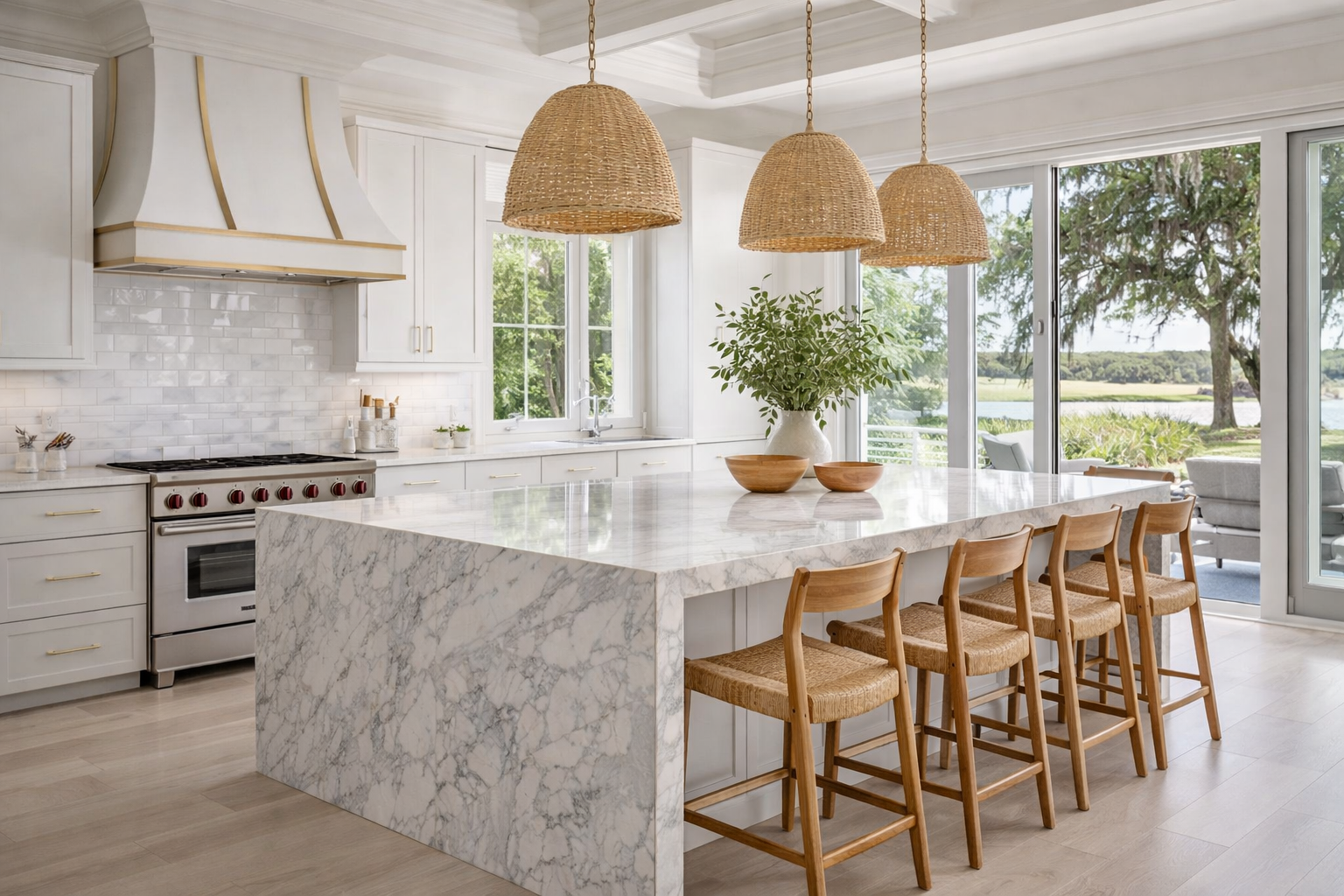
If you’ve been researching modern countertop designs, you’ve probably come across mitered edge countertops. They’re one of the most popular features in luxury kitchens today because they create the appearance of a thicker, more substantial countertop without requiring an oversized slab.
But one of the biggest questions homeowners ask is:
Are mitered edge countertops more expensive?
The short answer is:
Yes — usually.
But there’s a reason for that, and in many kitchens, homeowners feel the visual impact is worth the added investment.
What Is a Mitered Edge Countertop?
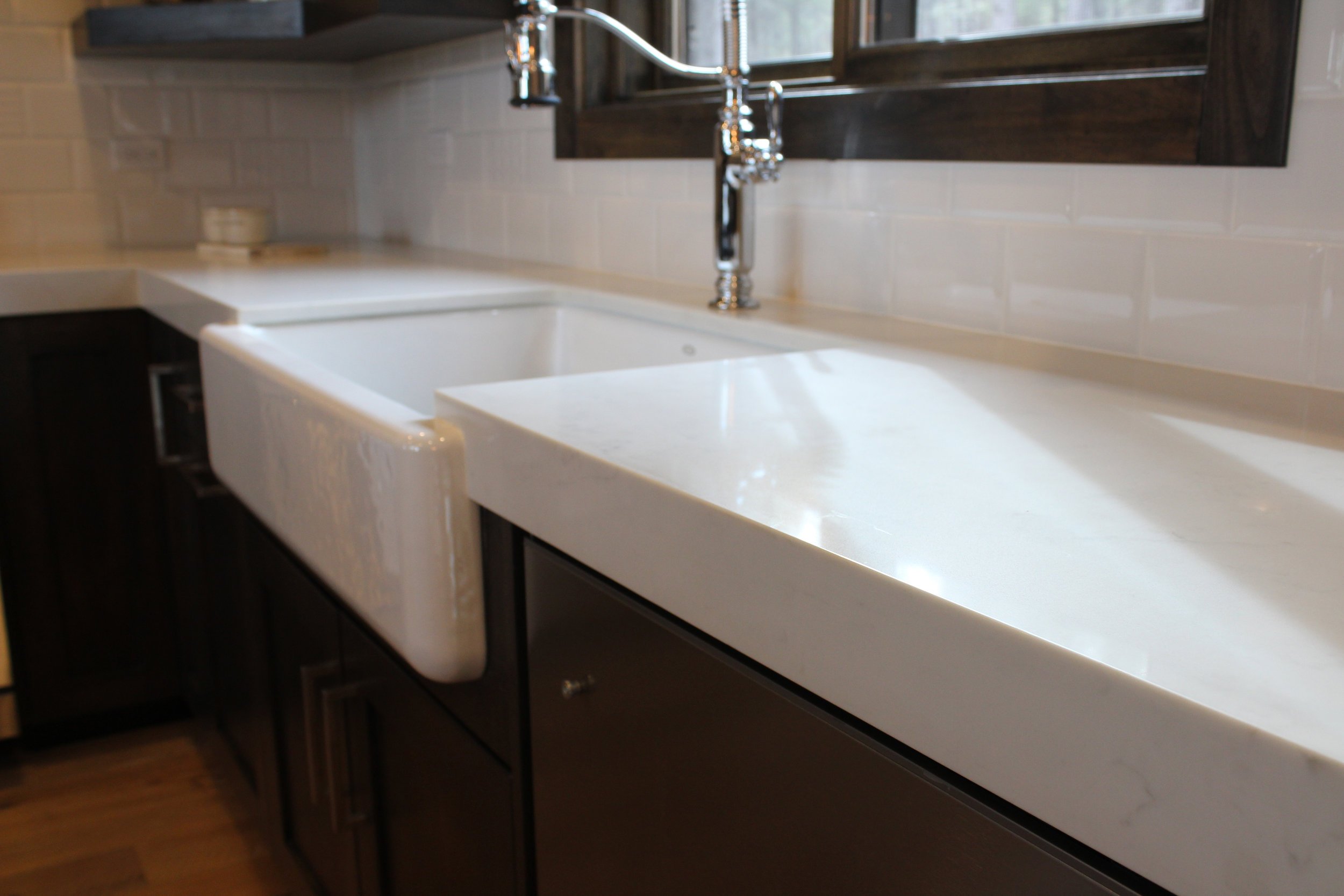
A mitered edge is created by joining two pieces of stone together at a 45-degree angle to create the appearance of a thicker countertop edge.
Instead of using a standard 2cm or 3cm slab edge, a mitered edge can make the countertop appear:
4 inches thick
6 inches thick
or even larger for dramatic waterfall island designs
This style is especially popular in:
modern kitchens
luxury coastal homes
waterfall islands
contemporary quartz designs
Why Do Mitered Edge Countertops Cost More?
There are several reasons mitered edge countertops typically cost more than standard countertop edges.
1. More Fabrication Work
Mitered edges require significantly more precision during fabrication.
The stone must be:
cut accurately
angled precisely
aligned carefully
polished seamlessly
Even small inconsistencies can become highly visible, especially with quartz or marble-look veining.
This level of craftsmanship takes additional labor and time compared to standard eased or beveled edges.
2. Vein Matching Matters
One of the biggest visual benefits of a mitered edge is the ability to continue the veining pattern down the edge of the countertop.
To achieve this clean look:
fabricators must carefully plan slab layout
cuts must align correctly
seams must be less noticeable
This becomes especially important with:
quartz
quartzite
marble-look surfaces
dramatic veining patterns
Poor vein alignment can immediately make a countertop look less premium.
3. More Material May Be Required
Depending on the design, mitered edges can require additional material.
Large waterfall islands or oversized edges may:
increase slab usage
reduce layout flexibility
require longer uninterrupted cuts
This can affect the overall project cost, particularly with premium materials.
4. Installation Is More Complex
Mitered countertops can also be heavier and more delicate during installation.
Large mitered islands and waterfall edges often require:
additional support
careful handling
precise seam alignment onsite
This adds time and complexity compared to traditional countertop installations.
Are Mitered Edge Countertops Worth It?
For many homeowners, the answer is yes.
Mitered edges create a high-end architectural look that feels:
clean
modern
substantial
custom
They work especially well in open-concept kitchens where the island becomes a focal point of the home.
In Bluffton and Hilton Head homes, we often see homeowners pair mitered edges with:
waterfall islands
large-format quartz slabs
modern coastal kitchen designs
When a Standard Edge May Make More Sense
Mitered edges are not necessary for every kitchen.
A standard eased edge or beveled edge may be a better fit if:
you prefer a more traditional design
you’re working within a tighter budget
your kitchen design is simpler
you want a softer or less dramatic look
The best edge profile depends on:
your style
your material selection
slab movement and veining
your overall kitchen design
Choosing the Right Edge for Your Kitchen
At Precision Granite & Marble, we help homeowners throughout Bluffton and Hilton Head compare edge profiles in person so they can better understand:
thickness options
edge styles
seam placement
veining continuity
overall visual impact
Sometimes the difference between a standard edge and a mitered edge completely changes how a kitchen feels.
Final Thoughts
Mitered edge countertops typically cost more because they require additional fabrication, planning, material coordination, and installation precision.
But for homeowners looking for a more dramatic and elevated kitchen design, they can completely transform the final result.
If you’re considering quartz, quartzite, or natural stone countertops and want to explore edge options in person, our team is here to help.
Visit Our Bluffton Showroom
Explore quartz, quartzite, granite, and marble countertop options and compare edge profiles in person with guidance from our team.
