
Quartz vs. Quartzite: What’s the Difference (and Which One Is Right for Your Kitchen)?
If you’ve been shopping for countertops, you’ve probably noticed people using quartz and quartzite like they mean the same thing. They don’t.
They can look similar—especially with all the popular white styles and softer veining right now—but they’re made in completely different ways. That affects how they hold up, how you care for them, and what you should expect long-term. Here’s the simple breakdown so you can choose the right fit for your kitchen.
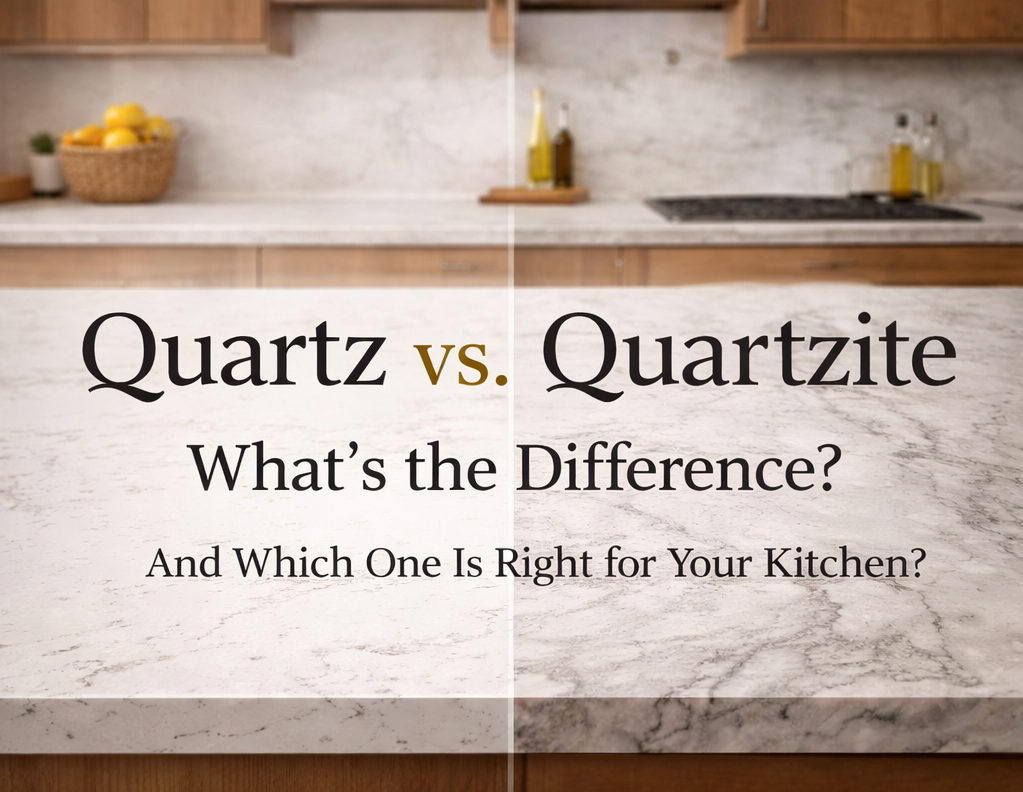
Quick Answer: Quartz Is Engineered, Quartzite Is Natural Stone
Quartz countertops are man-made using crushed quartz mixed with resins and pigments.
Quartzite countertops are natural stone, formed in the earth from sandstone under heat and pressure.
That one difference impacts everything: appearance, durability, maintenance, and price.
What Is Quartz?
Quartz countertops are an engineered stone made from:
natural quartz minerals (typically the majority of the slab)
resins/binders
pigments for color consistency
sometimes small decorative particles for depth
Why Homeowners Love Quartz
Quartz is popular because it’s:
Non-porous (doesn’t need sealing)
Low maintenance
Consistent in pattern and color
Great for modern kitchens and clean looks
Things to Know About Quartz
Quartz is durable, but it isn’t “indestructible.”
It can be more sensitive to high heat (hot pans directly on the surface aren’t recommended)
Very dark or ultra-bright whites can show smudges more easily, depending on the finish
Seams and pattern flow still depend on slab layout planning and fabrication skill
What Is Quartzite?
Quartzite is a natural stone. It starts as sandstone and transforms into quartzite through intense natural heat and pressure.
Why Homeowners Choose Quartzite
Quartzite is a favorite for people who want:
the natural movement and depth of real stone
high durability (often excellent for busy kitchens)
designs that resemble marble, but with more toughness (depending on the slab)
Things to Know About Quartzite
Quartzite is natural, so each slab is unique. That’s a benefit—but it also means:
Pricing can vary more depending on availability and grade
The look can vary from slab to slab (you’ll want to see full slabs)
Most quartzite needs sealing because it can be porous
Quartz vs. Quartzite: Side-by-Side Comparison
1) Appearance
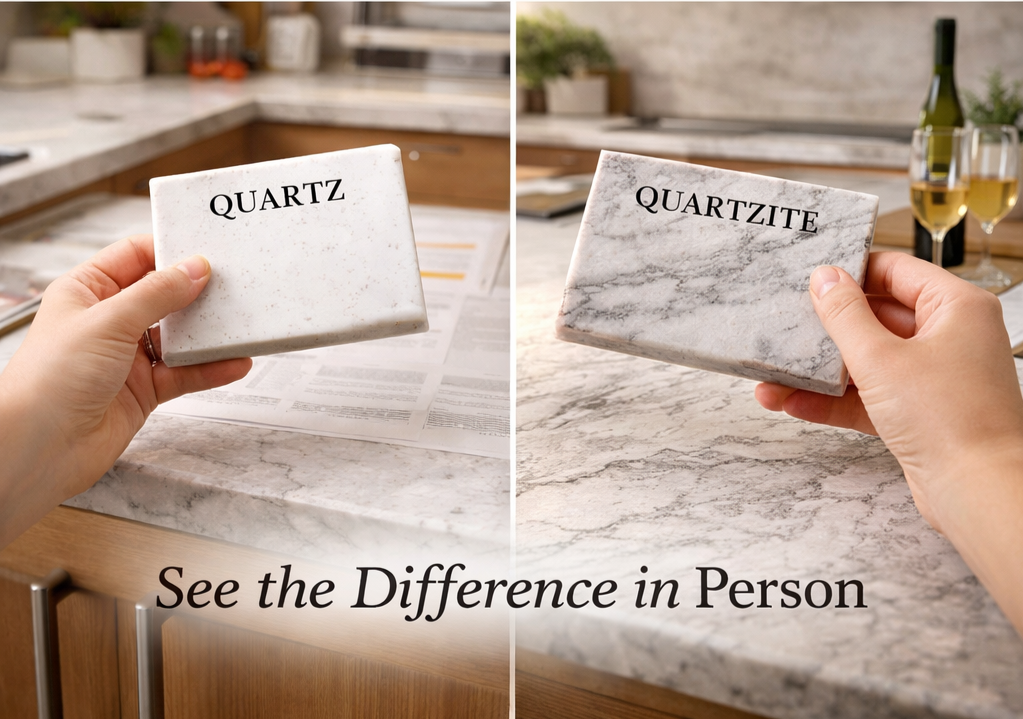
Quartz: consistent, controlled patterns; can mimic marble/stone
Quartzite: natural veining, movement, and variation; one-of-a-kind
2) Maintenance
Quartz: no sealing; easy day-to-day cleaning
Quartzite: typically needs sealing; maintenance depends on the stone
3) Durability
Quartz: very durable for daily use, but protect from high heat
Quartzite: very durable; often handles heat well, but sealing protects from staining
4) Stain Resistance
Quartz: strong stain resistance due to being non-porous
Quartzite: can stain if unsealed or if sealer wears off
5) Cost Range (General)
Prices vary by design, edges, layout, and installation—so this is a general guide:
Quartz: often mid-range, with premium designs reaching high-end pricing
Quartzite: often higher due to stone cost + handling + sealing (varies widely by slab)
Which One Should You Choose?
Choose Quartz If You Want:
low maintenance
consistent patterns
no sealing
a clean, modern look
a countertop that’s predictable from slab to slab
Choose Quartzite If You Want:
a true natural stone
dramatic veining and movement
unique slabs (no two kitchens look the same)
a premium natural look with strong performance (with proper sealing)
The “Big Mistake” We See
Many people choose based on a small sample and assume the final slab will look the same. With both quartz and quartzite, the end result depends heavily on:
slab selection
seam placement
vein matching
layout planning
fabrication quality
That’s why seeing full slabs and working with an experienced team matters.
Quartz or Quartzite in Bluffton & Hilton Head? We Can Help You Decide
At Precision Granite & Marble, we walk you through material selection, show full slabs, and help you compare quartz vs. quartzite based on your kitchen layout, style, and lifestyle.
If you’re not sure which direction to go, visit our showroom, and we’ll help you find the right fit.
Visit Our Showroom
📍 11 Parmenter Rd, Bluffton, SC
Quartz vs. Quartzite FAQ
-
No. Quartz is engineered stone made with resins and pigments, while quartzite is a natural stone formed in the earth.
-
Quartz is usually lower maintenance because it’s non-porous and doesn’t need sealing. Quartzite typically needs sealing to help prevent staining.
-
Both are durable, but in different ways. Quartzite is a natural stone that often handles heat well, while quartz is very strong for daily use but should be protected from high heat (use trivets).
-
Quartzite can stain if it’s unsealed or if the sealer wears down over time. With proper sealing and routine care, it performs very well.
-
Final cost depends on the slab/design, availability, layout, seams, edge details, fabrication complexity, and installation conditions—not just square footage.
-
Choose quartz for consistent patterns and low maintenance. Choose quartzite if you want a true natural stone look with unique veining and are okay with periodic sealing.
