
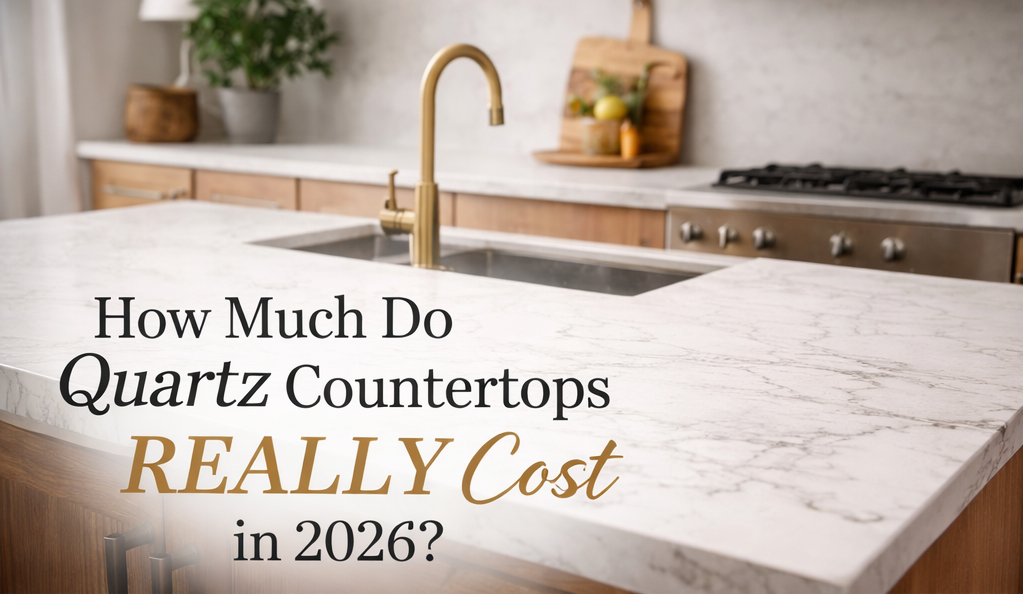
How Much Do Quartz Countertops Really Cost in 2026?
If you’ve started researching quartz countertops, you’ve probably noticed one thing quickly: pricing is all over the place.
Some companies advertise extremely low prices per square foot, while others seem significantly higher. So what’s the real cost of quartz countertops in 2026—and why the difference?
The answer comes down to more than just the material. Quartz countertops are where craftsmanship, design, and installation quality all play a major role.
Average Quartz Countertop Cost in 2026
Most homeowners can expect slabs of stone to cost anywhere in the range of:
$70 – $120 per sq. ft. for many quartz and granite options
$120 – $180+ per sq. ft. for higher-end quartz, quartzite, marble, and more complex designs
These ranges are meant to give a general ballpark, but they don’t tell the full story.
They often:
Exclude edge upgrades
Don’t account for layout or multiple slabs
Assume basic fabrication and installation
Don’t include detailed pattern matching or specialty work
What This Means for Your Project
Quartz, granite, and natural stone can overlap in price depending on:
Color and availability
Slab size and consistency
Veining and movement
Fabrication complexity
For example:
Some granites may fall on the lower end
Many quartz designs sit in the middle range
Materials like quartzite or marble can extend into higher pricing, depending on the slab
The Most Important Thing to Understand
Square foot pricing is just a starting point.
Your final cost is driven by:
How the slabs are selected and laid out
The edge details you choose
The level of craftsmanship in fabrication
The quality of installation
Two projects with the same square footage can vary significantly based on these factors.
Why Quartz Pricing Varies So Much
Not all countertops—and not all fabricators—are created equal.
1. Material Selection & Slab Layout
Quartz may be engineered, but premium designs often mimic natural stone with veining and movement.
To create a seamless look:
Slabs must be carefully selected
Patterns must be aligned across seams
Large, uninterrupted runs require full slab planning
In some cases, this means:
Using multiple slabs
Avoiding breaks in high-visibility areas
Designing layouts that preserve the flow of the pattern
This is where experience matters.
2. Fabrication: Where Craftsmanship Comes In
Fabrication is not automated—it’s a skilled trade.
At PGMSA, our fabricators are trained in-house over months to master:
Cutting
Polishing
Edge detailing
Every edge is hand-finished, not mass-produced.
Edge Profiles & Cost
Standard edges: typically included
Upgraded edges (bullnose, ogee, etc.):
→ Priced per linear foot
These require:
Additional shaping
Precision polishing
Time-intensive finishing
3. Mitered Edges (Thick Edge Look)
One of the most requested premium upgrades is a mitered edge.
This creates the appearance of a thicker slab by:
Cutting the stone at an angle
Flipping and joining pieces
Aligning the pattern so it flows seamlessly
This process is highly technical and requires:
Exact cuts
Pattern matching
Multiple handling steps
When done correctly, it gives the illusion of a solid, thicker piece of stone—with no visible transition.
4. Stone Complexity & Durability
Not all quartz cuts the same.
Some materials:
Contain more crystalline structure
Are more fragile during fabrication
This means:
Slower cutting speeds
More careful handling
Increased labor time to avoid defects
Higher-end materials often require more time and precision, which impacts cost.
5. Installation Quality (Where Most Issues Happen)
Installation is one of the most overlooked—but critical—parts of the process.
Our in-house installers are trained to:
Remove existing countertops carefully
Minimize damage to cabinets and walls
Precisely align seams and joints
Match silicone color to the stone
Poor installation is often where:
Chips happen
Seams are obvious
Cabinets or walls get damaged
This is where investing in the right team makes a difference.
6. Design & Layout Expertise
Before any cutting happens, proper planning is essential.
Our design studio works directly with homeowners and designers to:
Optimize slab usage
Reduce unnecessary seams
Ensure pattern flow
Determine if multiple slabs are required
With over a decade of experience designing with stone, we guide you through decisions that affect both appearance and cost.
What Impacts Your Final Price Most?
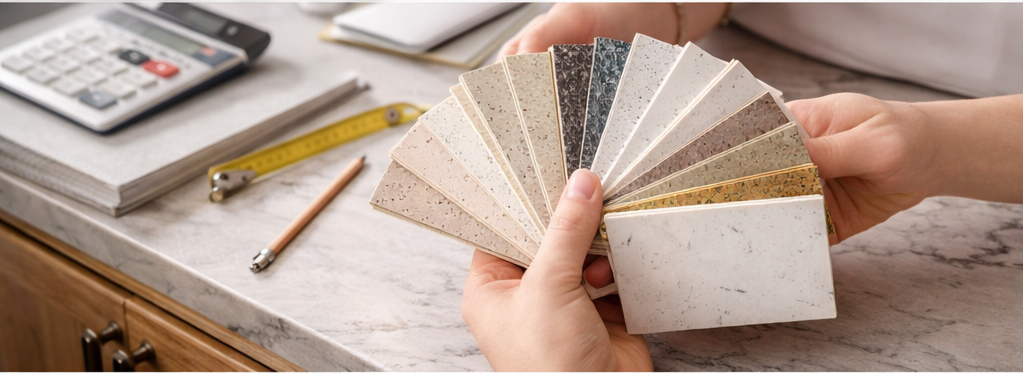
Here are the biggest factors that will influence your total investment:
Size of your project
Number of slabs required
Edge profile selection
Mitered or specialty edges
Complexity of the layout
Material selection
Installation conditions
Is Quartz Worth the Investment?
Quartz remains one of the most popular countertop choices because it offers:
Durability
Low maintenance
Consistent color and pattern
Modern, clean aesthetic
But like anything in your home, the quality of the result depends on the people behind it.
Quartz countertops aren’t just a product—they’re a combination of:
Design
Craftsmanship
Precision installation

Get a Real Quote for Your Project
Every kitchen is different, and the best way to understand your cost is to see materials and layouts in person.
Visit our showroom or request a quote to get a detailed estimate based on your space and design goals.
